
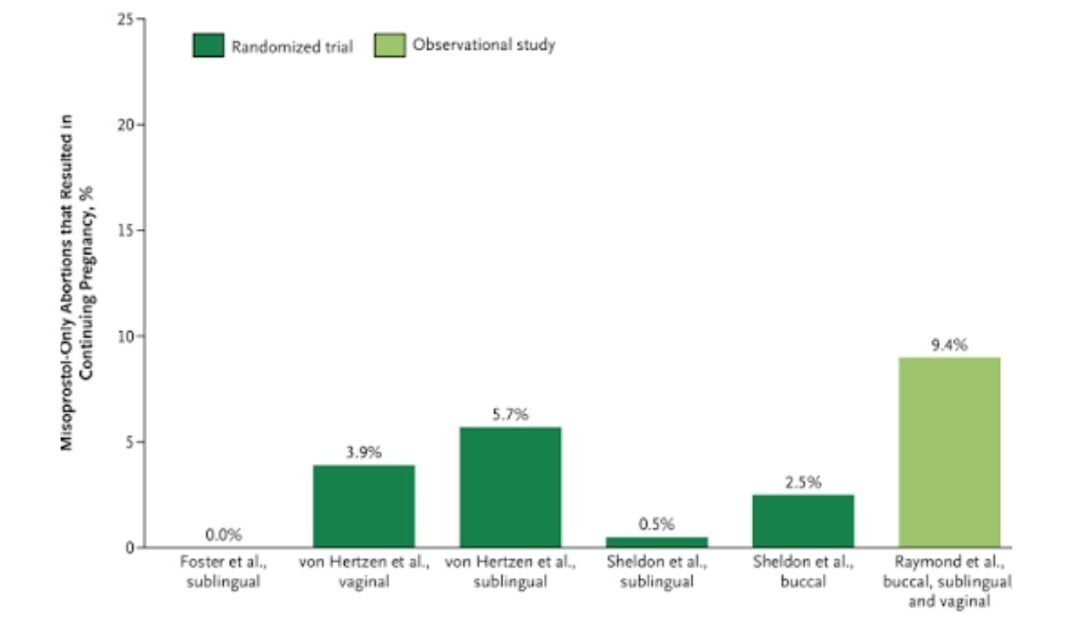
Documenting statistical success rates and physical tracking benchmarks is vital for establishing clinical clarity in reproductive healthcare. Retrospective public health reviews confirm that when utilized within strict, standardized parameters, non-surgical termination protocols demonstrate exceptionally high performance metrics globally [1.14]. This resource presents a comprehensive misoprostol efficacy metrics retrospective evaluation, mapping out expected biological phases, active timeline thresholds, and normal physiological symptoms for patients reviewing early care options.
Statistical Efficacy and Gestational Scale Variance
Clinical data compiled across international health registries demonstrates that the success of a dual-compound pharmaceutical regimen depends heavily on chronological precision. Within the globally accepted 70-day gestational limit, the protocol maintains a proven clinical efficacy rate exceeding 95% to 98%:
- Gestation Under 49 Days (7 Weeks): Retrospective evaluations show optimal performance metrics, with complete tissue evacuation rates approaching 98.5% without requiring secondary clinical adjustments.
- Gestation Between 50 and 70 Days (8-10 Weeks): Efficacy remains highly stable at roughly 95% to 96%. However, passing tissue at this later stage naturally induces a more active evacuation window with increased cramping and larger blood clots.
Attempting to utilize these specialized compounds past the 10-week threshold causes a steep drop in statistical efficacy, exponentially increasing the risk of an incomplete termination or prolonged tissue retention.
The Chronological Timeline and Physical Expectations
To reduce user anxiety during early care, public health archives break down the physical journey into distinct chronological milestones [1.14]. Understanding these phases helps individuals prepare safely for the active window at home.
The Initial Latent Phase (First 24 Hours)
Following the administration of the primary anti-progestogen compound, most individuals experience a quiet latent phase with zero noticeable physical symptoms. The medication operates silently at the receptor level to halt development cleanly. Normal daily routines can be maintained comfortably during this initial 24-hour step.
The Active Evacuation Phase (Hours 1 to 6)
The active window initiates within 1 to 4 hours after utilizing the secondary prostaglandin analogue tablets [1.14]. This compound targets the smooth muscles of the uterus, triggering rhythmic contractions to empty the cavity. Patients must expect significant, menstrual-like abdominal cramping and heavy bleeding. The peak passing window usually lasts between 2 and 6 hours, during which blood clots are normally passed. Managing this phase requires access to a comfortable resting space and standard over-the-counter pain relief.
The Stabilization Phase (Days 3 to 14)
Once the primary tissue successfully passes, active cramping drops sharply into a mild, manageable ache. Heavy bleeding tapers down over the next few days into a steady, moderate menstrual flow or light spotting that can persist for 1 to 2 weeks as the uterine lining returns to its normal state.
Securing Expert Data Profiles in the Kingdom of Bahrain
For individuals reviewing clinical timelines or researching the availability of authentic Cytotec Manama options, protecting your personal search privacy is a paramount safety requirement. Navigating reproductive health topics within the Gulf region demands an uncompromised digital environment free from invasive tracking scripts.
Connecting directly with an off-site care coordinator via a peer-to-peer, end-to-end encrypted chat portal ensures your identity is completely shielded. This confidential safety network allows women residing across Manama, Riffa, Muharraq, and Hamad Town to evaluate precise dosage protocols and cross-reference their recovery timelines in complete data privacy, far away from unverified or public online forums.